


South Africa’s agricultural exports grew to $15.1 billion from $13.7 billion in 2024, amid slow growth in the domestic economy. This increase in agricultural exports is significant considering the economy is growing at less than 2%. Tradable agriculture remains one of the few sectors capable of generating foreign earnings and supporting upstream-backward value chains. Although export strength has persisted alongside ongoing food-price pressures, highlighting structural asymmetries within the agro-food economy.
Food is not a single inflation category; it encompasses various value chains with markedly different exposure to export markets. When the channel to the market y is export-focused and substantial, tradability can help stabilise prices. Although risks from geopolitics and protectionist posture by some leading economies pose significant risks. Conversely, where consumption depends on structural imports or weak distribution networks, tradability tends to increase price volatility. Headline food inflation often conceals such segmentation. In December 2025, food inflation was 4.4% year-on-year, a moderate figure by historical standards. However, meat inflation reached 12.6% likely due to the outbreak of food and mouth disease (FMD), while fruit and vegetables experienced deflation probably driven by above average rainfall from La ’Nina weather phenomenon. This divergence indicates differentiated exposure rather than overall inflation. The poultry industry exemplifies this segmentation as well. South Africa imported around $293 million worth of poultry products and exported about $93 million in 2024, resulting in a structural trade deficit of roughly $200 million indicating latent growth potential. In poultry markets, domestic prices are effectively linked to import-parity conditions such as: (i) exchange rates, (ii) freight costs, and (iii) clearance delays directly influence retail prices. When logistics are subpar, price transmission intensifies.
Similarly, rice is even more structurally exposed. With imports of roughly $641 million and negligible tariffs, domestic rice prices are driven primarily by exchange-rate movements and shipping costs rather than by comparative disadvantage in unfavourable domestic production conditions. This exposure is structural rather than cyclical.
In contrast, beef operates differently. South Africa is a net exporter of beef, yet domestic beef prices have shown pronounced volatility. The drivers of prices are domestic factors such as biosecurity shocks, movement restrictions and cold-chain constraints. In the beef market, volatility reflects supply-side fragility rather than import dependence. The distinction is important because economic policy instruments to intervene differ. Import-parity markets respond to exchange-rate and logistics performance. Domestically constrained markets respond to biosecurity management and coordination efficiency.
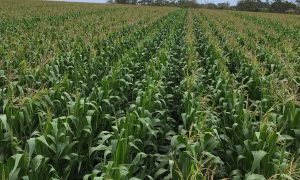
Export strength in horticulture and grains shows that tradability is not inherently inflationary. A large maize crop due to above rainfall from La’Nina weather phenomenon combined with strong exports has coincided with lower year-on-year prices. Where domestic supply is ample, and markets are competitive, export channels can absorb surplus without destabilising local affordability. Exchange-rate movements reinforce this asymmetry. In December 2025, the rand was roughly 7% stronger year-on-year against the US dollar. In fully import-dependent categories, such appreciation should ease price pressure. Yet meat inflation remained high. The constraint was not macroeconomic; it was sectoral.
South Africa, therefore, does not face a generalised food inflation problem but a concentrated fragility in trade-exposed proteins and structurally constrained value chains. Thus, the economic policy response should reflect such segmentation.
Trade-exposed staple proteins, especially poultry, should be monitored and appropriate economic policy instruments deployed to mitigate food-security risk categories. Structural import deficits, along with limited domestic distribution, intensify external shocks. Logistics performance is also significant. In import-parity markets, port efficiency and inland freight contributes to the inflation process. Biosecurity management in the meat sector must be regarded as economic factor. Persistent disease risks undermine both export credibility and domestic price stability.
It seems possible that South Africa can simultaneously boost agricultural exports and simultaneously face fragile food affordability. The two outcomes stem from a segmented trade structure, and not macroeconomic inconsistency. Therefore, the key question is not whether exports are increasing but whether the value chains that dominate household consumption are structurally resilient or vulnerable. Until this distinction informs macro-economic policy discourse, export success will continue to coexist with domestic food-price instability.
Disclaimer: The views expressed in this article is solely that of Buhlebemvelo Dube and Mahlogedi Thindisa, Agricultural Economists at the National Agricultural marketing Council, and does not necessarily reflect the views of Mzansi Agriculture Talk, their employers, or other associated parties.
















Pingback: zyvox antibiotics
Pingback: antibiotics for sinusitis
Pingback: cialis from india
Pingback: augmentin antibiotic
Pingback: contraindications sildenafil
Pingback: cenforce online
Pingback: viagra triangle chicago
Pingback: dapoxetine generic price
Pingback: 1mg finpecia finasteride tablets
Pingback: semaglutid tablett viktnedgång
Pingback: vardenafil highest dosage
Pingback: doxycycline hyclate acne side effects
Pingback: cialis and blood pressure
Pingback: ivermectin scabies inflammation reduction
Pingback: minoxidil 2% vs 5% study data
Pingback: minoxidil study results
Pingback: sildenafil counterfeit detection
Pingback: sildenafil oral jelly pricing
Pingback: avanafil contraindications
Pingback: vardenafil lowest strength
Pingback: difference between vardenafil and sildenafil
Pingback: orlistat contraindication criteria